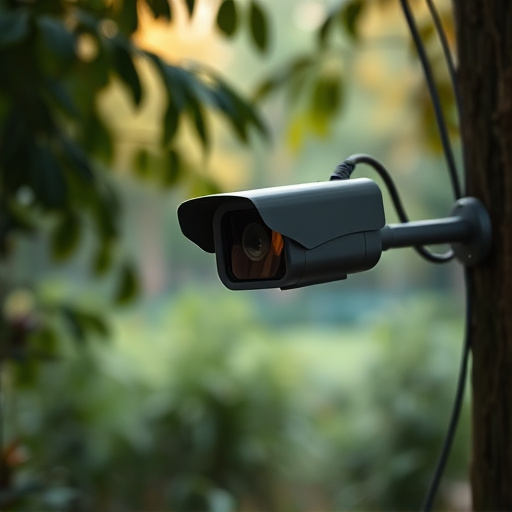
Wireless Night Vision Security Cameras Indoors provide 24/7 surveillance with advanced IR technology, capturing clear footage in low-light conditions. Setting up a network involves a central router, compatible cameras, and management software. Strategically place cameras for optimal coverage, ensuring stable connections via Wi-Fi or Ethernet. Use strong encryption and VPNs for enhanced security and remote access privacy.
Discover the power of wireless night vision security cameras indoors with this comprehensive setup guide. Learn how to transform your home or business into a secure environment using this advanced technology. From understanding the basics of wireless night vision cameras to configuring a robust network, this guide covers everything you need to know. By following these detailed steps, you’ll be able to set up a hidden camera network that offers superior surveillance and peace of mind.
- Understanding Wireless Night Vision Security Cameras Indoors
- Components of a Wireless Hidden Camera Network
- Setting Up the Base Station and Powering Up
- Configuring the Cameras: Positioning and Connections
- Creating a Secure Network and Remote Access
Understanding Wireless Night Vision Security Cameras Indoors
Wireless Night Vision Security Cameras Indoors offer a cutting-edge solution for home and business security, providing clear, real-time video surveillance even in complete darkness. These cameras leverage advanced infrared (IR) technology to capture low-light images and videos, ensuring around-the-clock monitoring without sacrificing quality. Understanding their inner workings is key to effective deployment.
At the heart of these systems lies a combination of IR LEDs and high-sensitivity sensors. When ambient light fades, the camera automatically switches to night vision mode, activating IR LEDs that illuminate the area in a spectrum invisible to the human eye but captured by the camera’s sensor. This allows for crisp, detailed footage, enabling users to monitor indoor spaces effectively, day or night.
Components of a Wireless Hidden Camera Network
When setting up a wireless hidden camera network, especially for indoor security with night vision capabilities, several key components come into play. These include a router, compatible security cameras, and an app or software to manage the network. The router acts as the central hub, allowing each camera to connect wirelessly and transmit data back to a central device.
Wireless night vision security cameras indoors require reliable internet connectivity for optimal performance. Ensure your router offers robust signal strength throughout the area you wish to monitor. Each camera should be configured to connect seamlessly to this network, providing live feeds that can be accessed remotely through the designated app. This setup allows for a comprehensive and discreet monitoring solution, making it an ideal choice for home or business security applications.
Setting Up the Base Station and Powering Up
To begin setting up your wireless night vision security camera network, start by placing the base station in a central location within the area you wish to monitor. This strategic placement ensures comprehensive coverage and optimal signal strength for all connected cameras. Once positioned, securely mount or place the base station, ensuring it’s stable and out of reach to prevent tampering.
Next, connect the power supply to both the base station and each individual camera. Ensure all devices are powered on and properly synchronized with the base unit. This step is crucial for establishing a robust wireless network, allowing seamless communication between cameras and ensuring consistent surveillance of your indoor spaces using these advanced Wireless Night Vision Security Cameras.
Configuring the Cameras: Positioning and Connections
When setting up a wireless hidden camera network, configuring your cameras involves strategic positioning and ensuring seamless connections. For optimal coverage, place indoor Wireless Night Vision Security Cameras in areas where potential risks or activities occur most frequently. This could include entry points, corridors, or any spaces that require constant surveillance.
Each camera should be connected to the network using a stable wireless signal. Ensure you have a reliable Wi-Fi router or access point within range, and consider using Ethernet cables for more robust connections if necessary. Proper placement and connection will enable your cameras to capture clear, detailed footage day or night, enhancing the overall security of your indoor spaces.
Creating a Secure Network and Remote Access
When setting up a network of wireless night vision security cameras indoors, creating a secure network and enabling remote access is paramount. Start by choosing a robust Wi-Fi router that supports high-speed internet connections and advanced security protocols like WPA2 or WPA3. Ensure your router is placed in a central location to provide comprehensive coverage throughout the building.
Configure your wireless night vision security cameras with strong, unique passwords for both their network connection and cloud services. Enable encryption on all communication channels to protect video feeds from unauthorized access. Additionally, set up a virtual private network (VPN) for secure remote access, allowing you to monitor your cameras from anywhere in the world while keeping your data safe and private.
Wireless Night Vision Security Cameras Indoors offer a modern, flexible solution for home or business security. By understanding the components of this network setup and following a structured guide, you can efficiently deploy a robust system. From setting up the base station to configuring cameras and securing your network, each step ensures optimal performance and remote access. This setup allows you to maintain peace of mind, knowing your indoor spaces are protected with clear, night-time visibility.